Exploring Homeopathic Remedy Potency Levels
A Complete Guide
Understanding why different strengths are used and how they affect treatment outcomes

One of the most frequently asked questions in my clinic is: "Doctor, what is potency? Why do you give different strengths to different patients?" Potency is one of the most unique and powerful aspects of homeopathy. In this comprehensive guide, I will explain everything you need to know.
What Does "Potency" Mean in Homeopathy?
Potency refers to the strength of a homeopathic remedy. It is determined by how many times the original substance has been diluted and succussed (shaken vigorously). This process is called potentization and was developed by Dr. Samuel Hahnemann.
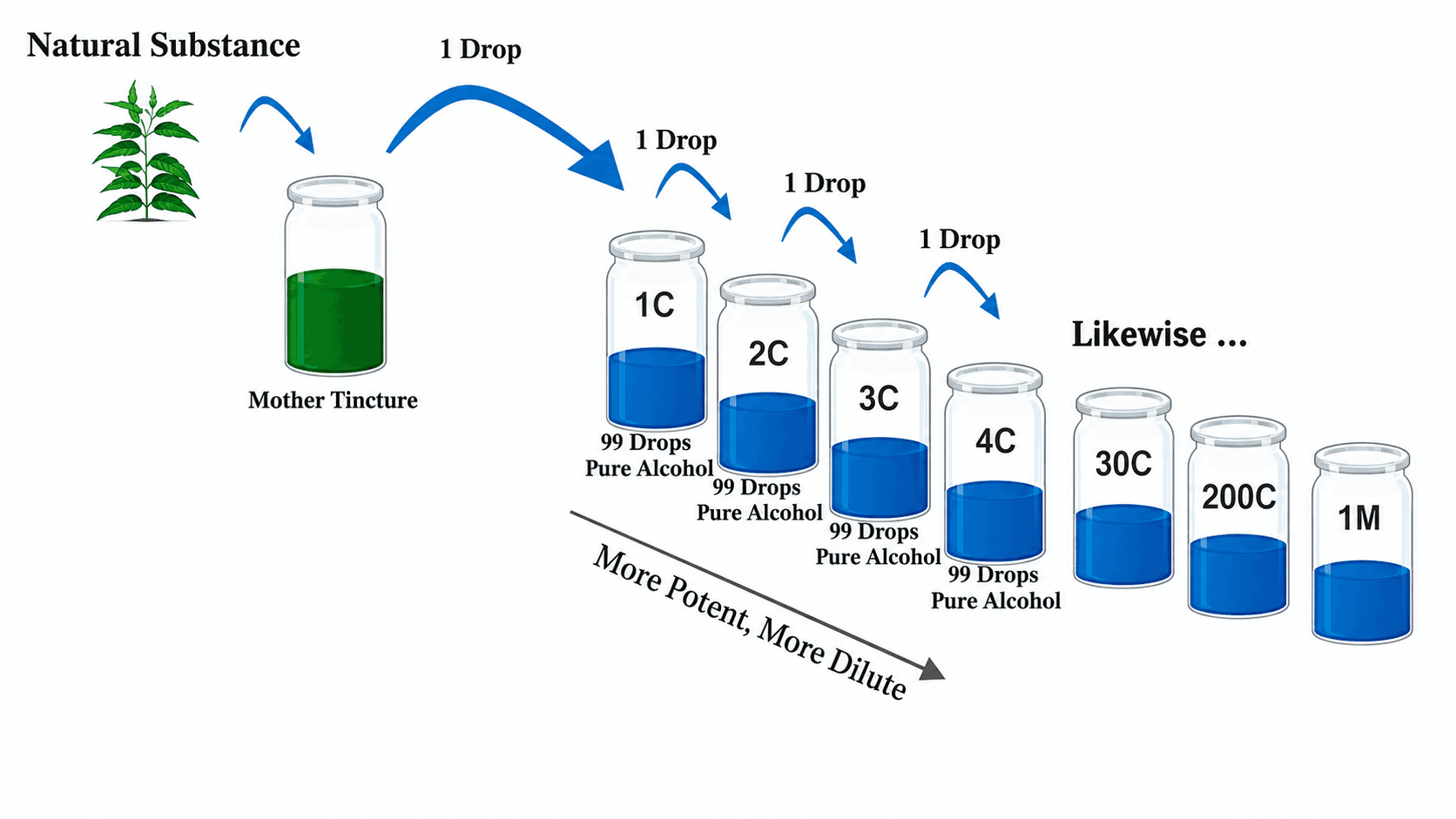
The Two Main Scales of Potency
Common Potency Levels & Their Uses
Low Potencies
(6C, 12C)
Best for acute conditions, physical symptoms, and beginners.
Medium Potencies
(30C, 200C)
Most commonly used for day-to-day and chronic cases.
High Potencies
(1M, 10M)
Used for deep constitutional treatment and mental-emotional issues.
Why Potency Matters
Right potency = Faster and deeper healing. Wrong potency may lead to slower results or temporary aggravation. Higher potency is not always better — it depends on the patient's sensitivity and the nature of the disease.
Ready to Experience the Power of Correct Potency?
Contact us today for a personalized consultation.