What is sciatica?
Sciatica is pain that travels along the path of the sciatic nerve, usually from the lower back or buttock down one leg. It is a symptom of irritation or compression affecting nerve roots in the lower spine, rather than a diagnosis on its own.
Sciatica may feel sharp, burning, electric or shooting. It can be frightening, but many episodes improve with time and an appropriate plan. The priority is to distinguish typical nerve pain from symptoms that need urgent evaluation.
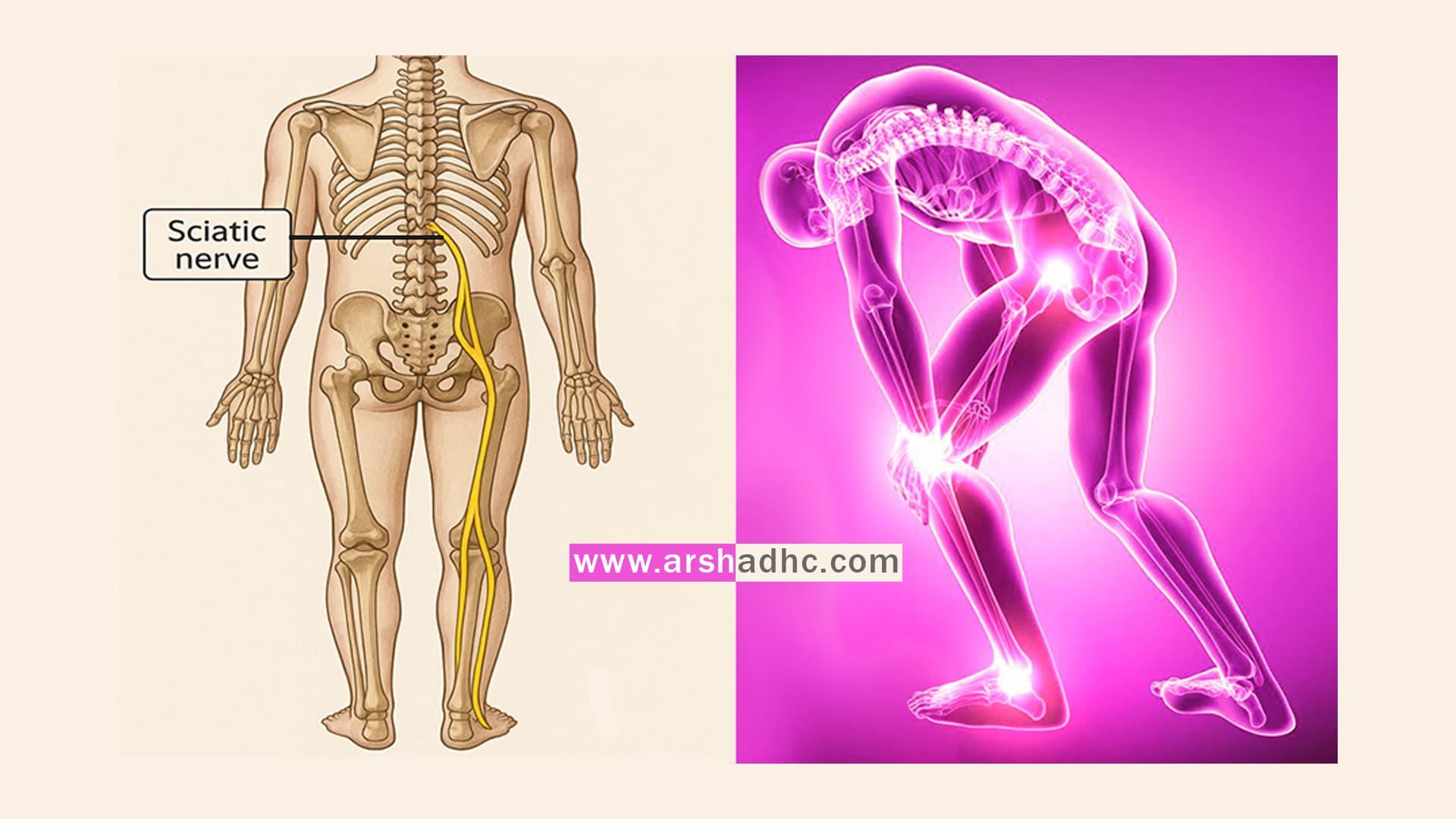
Sciatica symptoms
Typical nerve symptoms
- Pain from the back or buttock into the thigh, calf or foot
- Tingling, pins and needles or numbness
- Pain made worse by coughing, sneezing or some movements
- Burning, shooting or electric-shock sensations
Symptoms that need review
- New or worsening leg weakness
- Frequent falls or foot drop
- Pain that is severe or limiting daily activities
- Persistent numbness or symptoms in both legs
What causes sciatica?
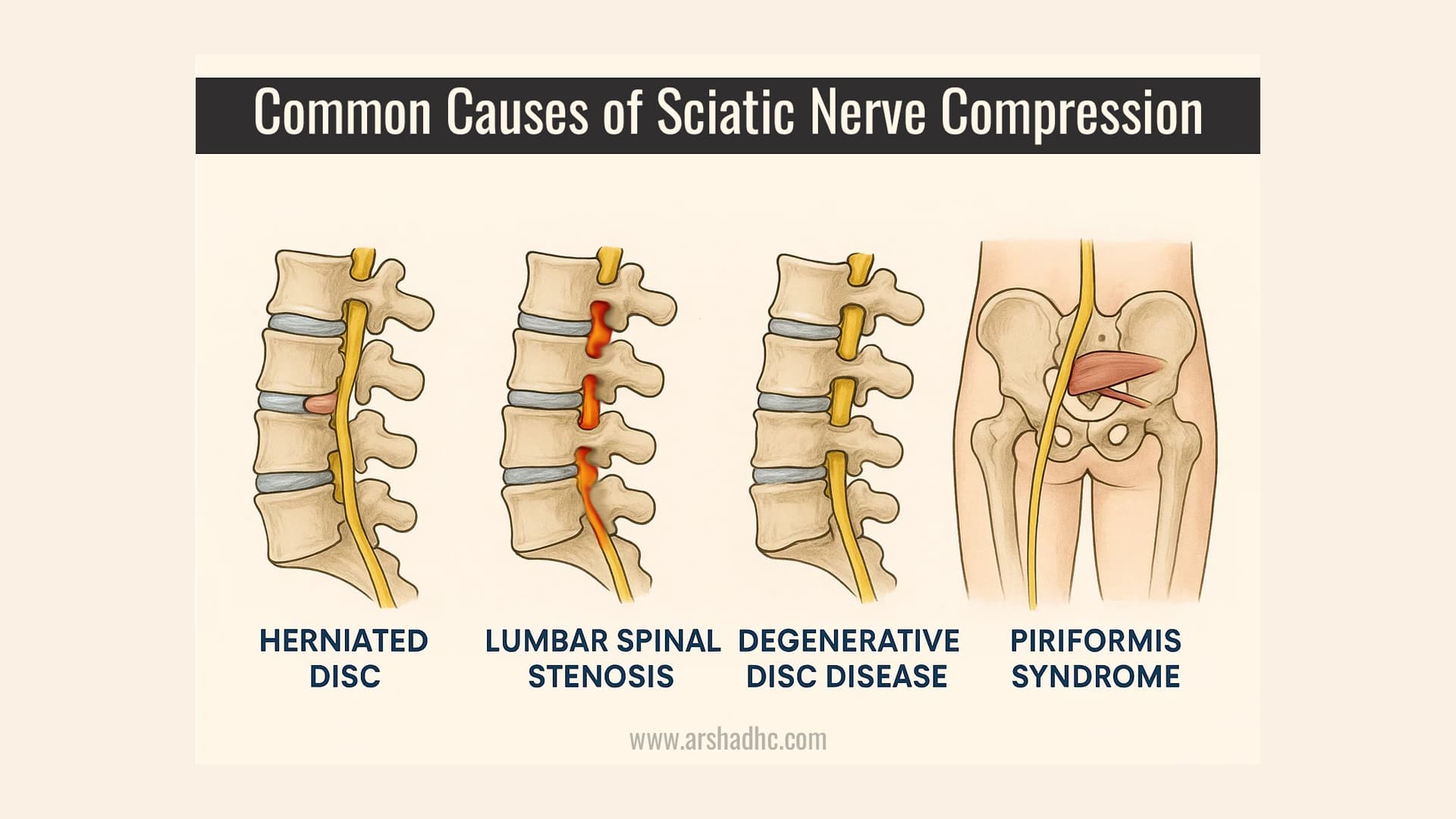
Sciatica often occurs when a lower-spine nerve root is irritated. Common causes include:
- Disc herniation: a disc can bulge or herniate and irritate a nearby nerve root.
- Spinal stenosis: narrowing around spinal nerves, more common with age-related changes.
- Degenerative changes: changes in discs or joints can contribute to nerve-root irritation.
- Less common causes: infection, fracture, inflammatory disease or cancer need exclusion when symptoms or history raise concern.
Sciatica diagnosis and imaging
A clinician will ask where the pain travels, whether there is numbness or weakness, and how symptoms affect movement. Examination may include strength, sensation, reflexes and walking. MRI or other imaging is not routinely needed in the first instance; it is usually considered in a specialist setting if it will change management or if red flags are present.
Bring a clear history of when symptoms began, changes in strength or sensation, prior back problems, injuries, fever, weight loss, cancer history and medicines you take.
Sciatica treatment: a tailored plan
The best sciatica treatment depends on the suspected cause, duration, severity, neurological findings and your ability to function. A clinician may recommend a combination of approaches. Individualised homeopathic care can provide valuable complementary support for comfort and recovery.
Common first-line approaches
- Advice to remain as active as symptoms allow
- A tailored exercise or physiotherapy programme
- Guidance on pacing, sleep and return to activity
- Individual discussion of pain-relief options and risks
- Individualised Homeopathic treatment
Specialist options when needed
- Further assessment or imaging if it will affect decisions
- Manual therapy only as part of a wider exercise-based plan
- Psychological support for persistent pain when appropriate
- Spinal specialist or surgical evaluation for selected cases
Do not use a medicine, injection or procedure solely because it is advertised as a “permanent sciatica cure.” Discuss expected benefits, risks and alternatives with a qualified clinician.
Living with sciatica: safe self-care
For many people, gradual movement is more helpful than complete rest. Keep ordinary activities going where possible, break tasks into manageable periods, and avoid sudden increases in activity. A physiotherapist can tailor exercises to your particular pattern of pain and movement.
Self-care should not mean ignoring neurological changes. Stop an exercise and seek advice if it triggers new weakness, spreading numbness, severe escalating pain or any bladder or bowel symptoms.
Sciatica emergency red flags
Seek emergency assessment immediately for new difficulty starting or controlling urination, loss of bowel control, numbness around the genitals, anus or buttocks (“saddle numbness”), or rapidly worsening weakness in one or both legs. These can be signs of cauda equina syndrome and need urgent care.
Also seek prompt medical review for fever, unexplained weight loss, a history of cancer, severe trauma, pain that is getting rapidly worse, or symptoms that do not fit a typical sciatica pattern.
Homeopathic Treatment for sciatica
People searching for homeopathic treatment for sciatica, natural sciatica remedies or supportive care often want a gentle, individualised approach. Sciatica still requires proper medical assessment, especially when weakness, numbness or bladder and bowel symptoms are present.
At Arshad Homeopathic Clinic we take a detailed case history and select individualised remedies to support pain relief, improve mobility, reduce discomfort and promote overall recovery. Always tell your doctor about any remedies you use. Do not delay medical assessment for weakness, numbness, severe pain or any bladder and bowel change, and do not stop prescribed treatment without speaking to your treating clinician.
Frequently asked questions about sciatica
What is sciatica?
Sciatica describes leg pain caused by irritation or compression of nerve roots in the lower back. Pain often travels from the lower back or buttock down one leg.
What are common sciatica symptoms?
Symptoms can include burning, shooting or electric-shock-like pain, tingling, numbness, weakness, and pain that travels into the buttock, thigh, calf or foot.
What causes sciatica?
Common causes include a slipped or herniated disc, spinal narrowing, degenerative changes and, less commonly, other conditions. A clinician can assess the likely cause.
Can sciatica go away on its own?
Many episodes improve over weeks to months with appropriate self-management and clinical advice. Individualised homeopathic care can support comfort and recovery during this period. Persistent, severe or worsening symptoms should still be reassessed.
How is sciatica diagnosed?
Diagnosis is usually based on symptoms, history and examination. Imaging is not routinely needed initially unless serious pathology is suspected or a specialist believes it will change treatment.
What is the best treatment for sciatica?
The best plan depends on symptom severity, function, duration and any neurological signs. It may include staying active, an exercise programme, pain management advice, physiotherapy, individualised homeopathic treatment and specialist care when indicated.
Should I rest in bed with sciatica?
Long periods of bed rest are generally not advised. Gentle movement and a gradual return to normal activities are commonly recommended, within your limits and clinical advice.
What exercises help sciatica?
Exercises should be selected for your presentation by a qualified clinician or physiotherapist. Stop and seek advice if activity causes worsening weakness, numbness or severe pain.
Can a slipped disc cause sciatica?
Yes. A disc bulge or herniation can irritate a nerve root and cause sciatica, but not every disc change seen on a scan explains pain.
Is sciatica the same as lower-back pain?
Not exactly. Sciatica is nerve-related pain that typically travels down the leg. Lower-back pain may occur with sciatica but can also happen without nerve involvement.
When is sciatica an emergency?
Seek emergency assessment for new bladder, bowel or sexual-function changes, numbness around the genitals or buttocks, or rapidly worsening weakness in the legs.
Can sciatica cause leg weakness?
It can. New, progressive or significant weakness needs prompt medical assessment because it may indicate nerve compression requiring urgent care.
Is surgery needed for sciatica?
Most people do not need surgery. A spinal specialist may discuss it when symptoms remain severe despite appropriate care or when there are significant neurological problems.
Can I walk with sciatica?
Gentle walking is often helpful for many people, but the right amount varies. Reduce or pause if pain sharply worsens, and ask a clinician for individual guidance.
How long does sciatica last?
Duration varies. Many episodes improve within weeks to a few months, but persistent pain or repeated episodes may need a more structured treatment plan.
Should I have an MRI for sciatica?
An MRI is not routinely required at first presentation. A specialist may recommend imaging when results are likely to change management or there are red flags.
Can pregnancy cause sciatica?
Pelvic and back pain can occur in pregnancy, but new severe pain, weakness, numbness or bladder and bowel changes need prompt assessment by the maternity or medical team.
When should I see a sciatica specialist?
Seek medical review if pain is severe, disabling, persistent, worsening, accompanied by weakness or numbness, or if you have any red-flag symptoms.
Can homeopathy help with sciatica?
Homeopathic treatment help people experiencing sciatic pain, stiffness, tingling or discomfort extending into the leg. At Arshad Homeopathic Clinic, remedies are selected according to the individual's specific pain pattern and accompanying symptoms.
Are homeopathic medicines safe for sciatica?
Homeopathic remedies are generally gentle and highly diluted when prescribed appropriately. Persistent weakness, severe numbness or loss of bladder or bowel control requires immediate medical assessment.
Which homeopathic medicines are used for sciatica?
Remedies such as Rhus tox, Hypericum, Colocynthis, Gnaphalium and Bryonia may be considered depending on the patient's symptoms. The most suitable remedy varies from one person to another and should be individually selected.
Can homeopathy cure sciatica?
Homeopathy can provide personalised support for people dealing with recurring sciatic discomfort and related symptoms. At Arshad Homeopathic Clinic, treatment is tailored to the individual's complete symptom picture rather than using the same remedy for every case.
Discuss Your Sciatica related Issues with Arshad Homeopathic Clinic
At Arshad Homeopathic Clinic, we provide individualised homeopathic care for people experiencing sciatica, including shooting pain, numbness, tingling and discomfort that may extend from the lower back into the hip or leg. During consultation, we carefully examine the nature of the pain, its location, movements or positions that aggravate or relieve it, along with other physical and general symptoms. This detailed assessment helps us select a remedy suited to the individual's overall symptom pattern. Our aim is to support greater comfort, mobility and day-to-day wellbeing through personalised homeopathic care.
Medical information notice: This page provides general information, not a diagnosis or individual medical advice. Sciatica-like symptoms can occasionally reflect urgent neurological or spinal conditions.