What is an anal fistula?
An anal fistula, also called fistula-in-ano or a perianal fistula, is a small abnormal tunnel that connects the anal canal to the skin near the anus. It often develops after an infection in an anal gland creates an anal abscess. When an abscess drains, a persistent channel can remain behind.
A fistula is not the same as piles, an anal fissure or ordinary skin irritation. Because fistulas rarely close without proper assessment, symptoms such as ongoing drainage, a recurring painful lump or a small opening near the anus should be evaluated by a colorectal specialist. Supportive homeopathic care can also play a helpful role in overall recovery.
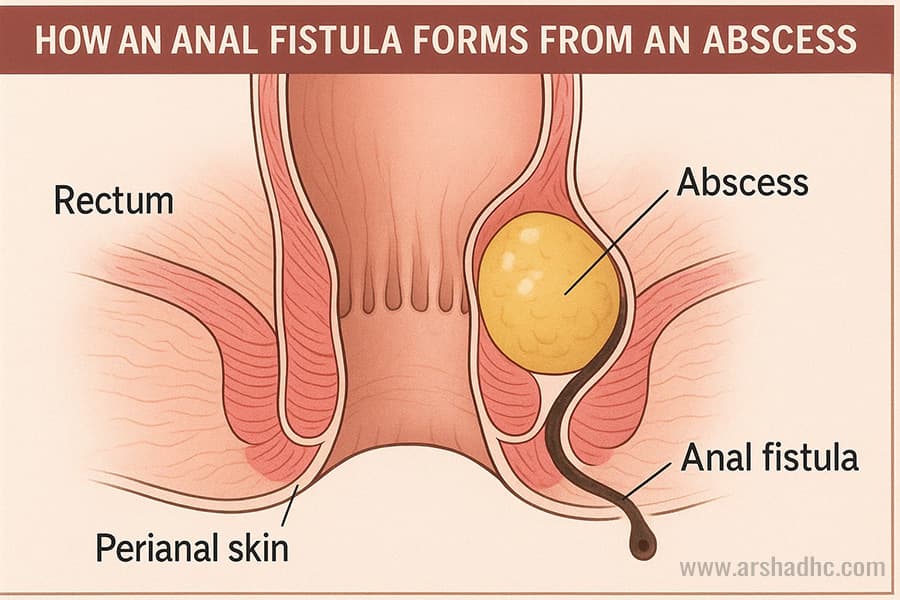
Anal fistula symptoms
Symptoms may settle temporarily when fluid drains, then return as the tract blocks or becomes infected again. Common signs include:
Local symptoms
- Constant or throbbing pain near the anus
- Skin irritation, redness or swelling
- A visible pit or small opening near the anus
- Discharge of pus, fluid or blood-stained fluid
- Unpleasant odour or staining of underwear
Signs of infection or abscess
- Increasing swelling or tenderness
- Fever, chills or feeling unwell
- Pain when sitting, moving or passing stool
- A new painful lump near the anus
- Difficulty controlling bowel movements in some cases
What causes anal fistula?
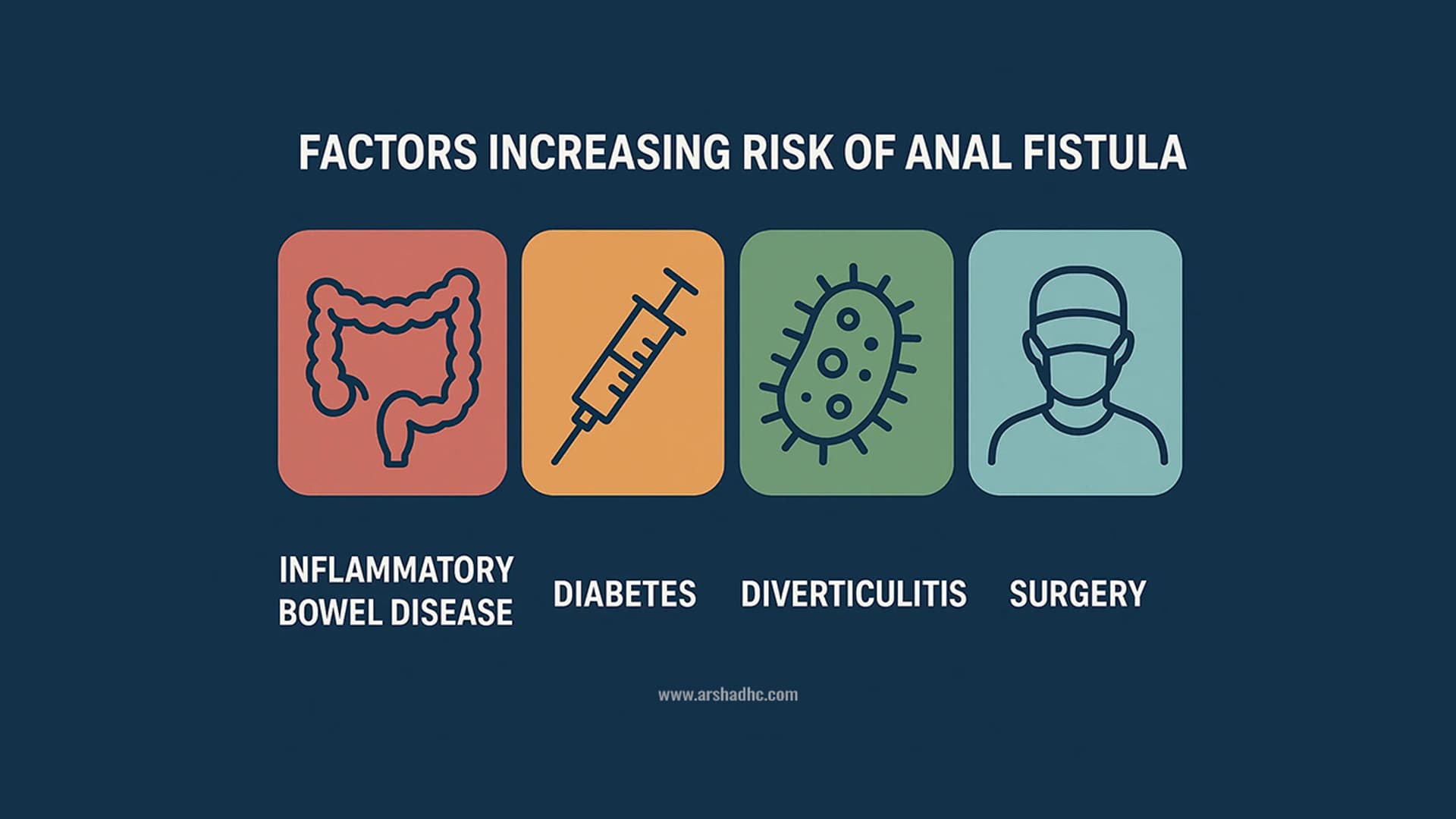
Most anal fistulas follow an infected anal gland and an abscess. They are not caused by poor hygiene. Less common causes include:
- Crohn’s disease: an inflammatory bowel disease that can cause perianal fistulas; learn more on our IBD page.
- Previous anorectal surgery, injury or radiation treatment.
- Hidradenitis suppurativa, tuberculosis, HIV or other infections in selected cases.
- Rarely, other medical conditions that require specialist investigation.
Anal fistula diagnosis: why assessment matters
A doctor will ask about drainage, abscesses, bowel symptoms, Crohn’s disease and previous procedures. Examination is often followed by tests to map the tract and protect the anal sphincter muscles.
Clinical examination
The clinician checks for an external opening, drainage, swelling, tenderness and associated abscess.
Imaging or endoscopy
MRI, ultrasound, CT or proctoscopy may be used to identify branches, internal openings and involvement of sphincter muscles.
Examination under anaesthetic
For some fistulas, an examination under anaesthetic gives the clearest information for safe procedural planning.
When to seek urgent care
Seek urgent medical help for fever, rapidly worsening pain, a swollen red area, heavy bleeding, repeated vomiting, fainting, severe weakness or feeling very unwell. These can be signs of an abscess or serious infection.
Anal fistula treatment options
There is no single best treatment for every anal fistula. The right option depends on whether the tract is simple or complex, whether it crosses sphincter muscles, whether it branches, and whether Crohn’s disease or an abscess is present. The aim is to treat infection and close the fistula while preserving bowel control. Individualised homeopathic treatment provide valuable support throughout the process.
Important treatment principles
- An abscess may need urgent drainage.
- Antibiotics alone do not usually cure a fistula.
- Complex or Crohn’s-related fistulas need special care.
- Every procedure has benefits and risks, including recurrence and effects on continence.
- Supportive homeopathic care help with comfort and recovery.
Common surgical approaches
- Fistulotomy: opening a selected simple tract to heal as a flat scar.
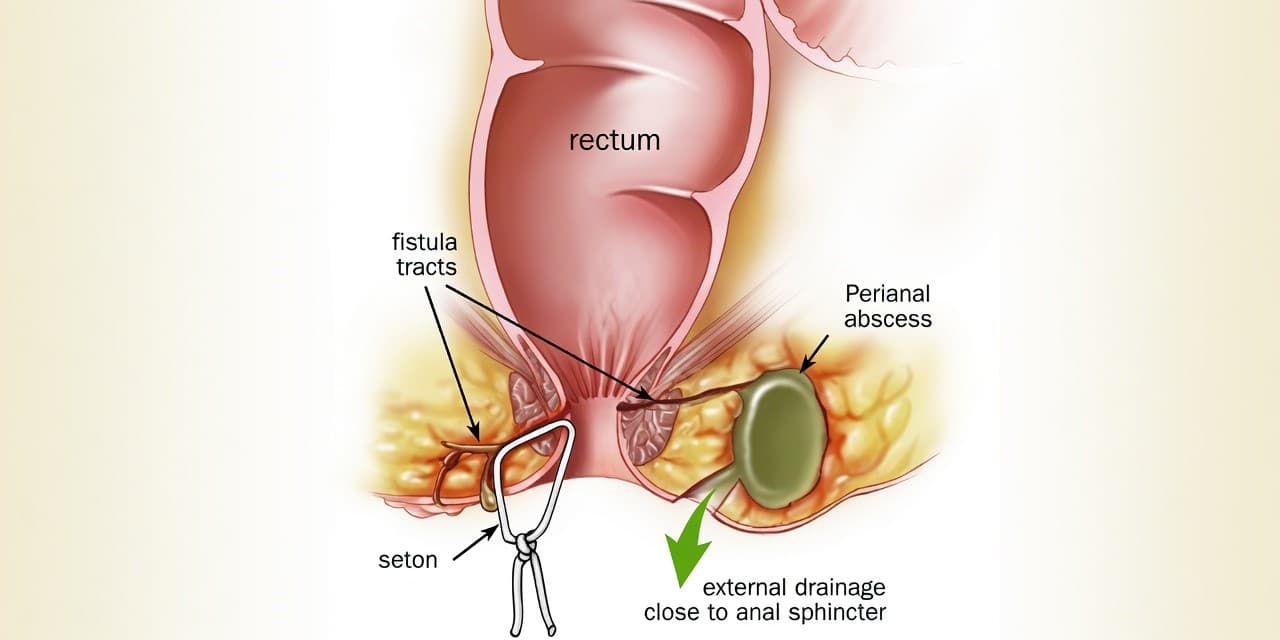
- Seton: a loop that helps drainage and can support staged treatment.
- LIFT or advancement flap: sphincter-sparing options for selected fistulas.
- Other procedures: may include endoscopic, laser, glue or plug techniques in appropriate cases.
Anal fistula recovery and aftercare with Homeopathy
Recovery depends on the size and complexity of the fistula, the presence of drainage or infection, and each person’s individual healing response. At Arshad Homeopathic Clinic we support recovery with individualised remedies selected according to the complete symptom picture, energy levels and constitution. Keep follow-up appointments and report persistent drainage, increasing pain, fever, bleeding or difficulty controlling bowel movements to your treating physician without delay.
Helpful aftercare usually includes keeping the area clean as advised, preventing constipation, supporting comfortable bowel movements and gradually returning to normal activity. Individualised homeopathic medicines offer gentle support for comfort, energy and tissue healing during this phase.
Homeopathic support for anal fistula
People searching for homeopathic anal fistula treatment, natural fistula care or supportive treatment alongside surgery often want a gentle, individualised approach. At Arshad Homeopathic Clinic we take a detailed case history and select individualised remedies to support the body’s healing response, reduce discomfort, improve energy levels and promote overall recovery.
Frequently asked questions about anal fistula
What is an anal fistula?
An anal fistula is an abnormal tunnel between the anal canal and the skin near the anus. It often develops after an anal abscess.
What are the symptoms of an anal fistula?
Common symptoms include recurring pain, swelling, skin irritation, pus or blood-stained drainage, and a small opening near the anus. Fever can indicate an abscess or infection.
Can an anal fistula heal on its own?
Anal fistulas rarely heal completely without proper assessment. A colorectal surgeon should evaluate the fistula and recommend the most suitable treatment approach. Individualised homeopathic care support overall healing and comfort.
Can homeopathy treat anal fistula?
Homeopathic care may provide individualised support for people experiencing anal fistula-related pain, discharge and discomfort. At Arshad Homeopathic Clinic, treatment is selected according to the patient's symptoms and overall health, alongside appropriate medical assessment.
Are homeopathic medicines safe for anal fistula?
When prescribed by a qualified homeopathic practitioner, remedies are generally gentle and highly diluted. They should be used responsibly without delaying necessary medical evaluation or discontinuing prescribed treatment.
Which homeopathic medicines are used for anal fistula?
Remedies such as Silicea, Hepar sulphuris, Myristica, Calcarea sulphurica, Nitricum acidum and Mercurius solubilis may be considered according to the individual symptom pattern. The appropriate remedy and potency should be determined through professional case assessment.
May I use homeopathic medicines myself without a doctor's consultation?
Self-medication is not advisable because anal fistula can vary considerably in symptoms and underlying causes. A qualified practitioner should assess the case and select an appropriate remedy while ensuring that warning signs receive timely medical attention.
What causes anal fistulas?
Most are linked to an infected anal gland and an abscess. Less common causes include Crohn’s disease, previous surgery, trauma, tuberculosis and other conditions.
Is an anal fistula dangerous?
It is not something to ignore. Ongoing infection, recurrent abscesses and complex fistula tracks can cause complications, so prompt assessment is important.
What is the best anal fistula treatment?
The best treatment depends on the fistula’s anatomy, branches, relation to sphincter muscles, symptoms and whether Crohn’s disease is involved. Many patients benefit from homeopathic medicines for comfort, energy and recovery.
What is a fistulotomy?
A fistulotomy opens the fistula tract so it can heal from the inside out. It may be suitable for selected simple fistulas where sphincter-muscle risk is low.
What is a seton for anal fistula?
A seton is a surgical thread or loop placed through a fistula tract. It can allow drainage and help manage complex fistulas while a longer-term plan is made.
Does anal fistula treatment always require surgery?
Treatment depends on the fistula's type, complexity and clinical condition, so surgery is not necessarily the first option in every case. At Arshad Homeopathic Clinic, individualised homeopathic care is explored while appropriate medical assessment continues.
Can laser treatment cure anal fistula?
Laser procedures may be suitable for selected fistula cases, depending on their location and complexity. Individualised homeopathic care can also be considered for symptom support, with specialist evaluation guiding the need for any procedure.
Can homeopathy be used alongside fistula treatment?
Yes, homeopathic care may be used as a complementary approach alongside appropriate fistula management. Inform your surgeon or treating physician about any homeopathic remedies you are taking.
Does anal fistula cause cancer?
Most anal fistulas are not cancer. However, a persistent, recurrent or unusual anal problem needs specialist assessment to establish the cause.
Can Crohn’s disease cause anal fistula?
Yes. Crohn’s disease can cause perianal fistulas.
What should I do if pus is draining from near my anus?
Arrange prompt medical assessment. Drainage may reflect a fistula or abscess. Fever, worsening pain, redness or feeling unwell need urgent care.
How is an anal fistula diagnosed?
A clinician examines the area and may arrange proctoscopy, ultrasound, MRI or an examination under anaesthetic to map the tract and plan treatment.
How long does fistula recovery take?
Recovery time differs for each person and depends on the size and complexity of the fistula, the presence of infection or drainage, and individual healing capacity. At Arshad Homeopathic Clinic individualised remedies are prescribed to support comfort, energy and tissue healing throughout this phase. Follow the guidance of your treating physician, keep follow-up visits, and report persistent drainage, fever or increasing pain without delay.
Can anal fistula return after treatment?
Yes, recurrence is possible, especially with complex, branching or Crohn’s-related fistulas. Regular follow-up helps detect persistent drainage or new symptoms early. At Arshad Homeopathic Clinic ongoing individualised care is used to support healing and reduce the chance of repeated flares, while any new or worsening signs are assessed promptly.
Should I use antibiotics for an anal fistula?
Antibiotics alone do not usually close a fistula tract and are not a substitute for proper assessment when an abscess is present. A clinician decides whether antibiotics are needed in your case. Individualised homeopathic treatment can be used to support comfort and recovery, and should be coordinated with any medical care you are receiving.
When is an anal fistula an emergency?
Seek urgent medical help for fever, severe or rapidly worsening pain, spreading redness, a swollen area, heavy bleeding, confusion, fainting or feeling very unwell.
Discuss Your Health Issues with Arshad Homeopathic Clinic
If you have an established diagnosis or are recovering after fistula treatment, individualised homeopathic care can offer meaningful support for comfort, healing and overall recovery. For fever, severe pain, heavy drainage, a swollen red area or any other urgent signs, Book a consultation to receive a carefully selected remedy matched to your unique symptom picture.
Medical information notice: This page provides general information, not a diagnosis or a substitute for care from a qualified medical professional. Anal fistula requires proper specialist assessment.